
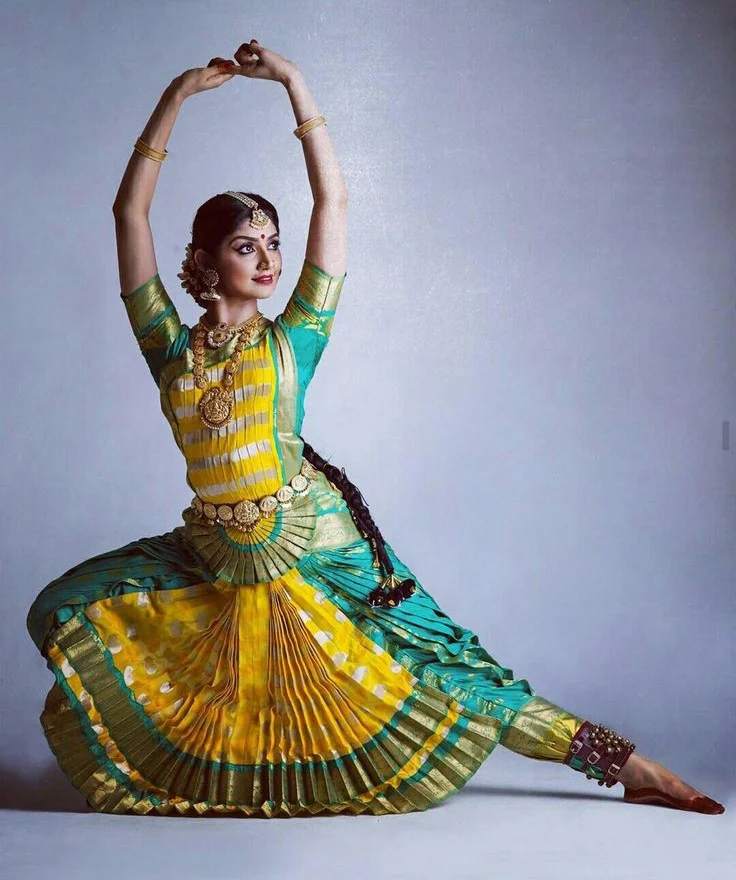
Bharatanatyam costume on rent… Why?
Choosing a Bharatanatyam costume on rent is becoming the most practical option for dancers of all age groups.
1. Cost-effective for Occasional Performance
A complete Bharatanatyam dress-silk drape, stitched pleats, blouse/pyjama, or stitched saree- in addition to jewellery and ghungroos, may be very expensive. For students, school programs, or just occasional dance events, renting saves you from shelling out a large sum at one time. Most houses rent out costumes for a fraction of the buying price.
2. Suitable for Students & Beginners
For a total beginner, it is difficult to know what size to get, what style to use, and how frequently you’ll play. Renting allows you to try different styles and sizes without committing to them long-term. This flexibility is especially handy for complete beginners or casual learners.
3. Access to quality, performance-ready costumes
Reputed rental services will have well-stitched costumes in silk, art silk, or comfortable fabric with proper pleats and fan-folds, besides matching jewelry/ghungroos, to make you stage-ready without compromising on traditional aesthetics.
4. Convenient for Group Events and One-off Shows
Be it a festival performance, school annual day, group recital, or casual cultural event, renting helps uniformity if multiple dancers need costumes that are alike. Rental houses may offer bulk rentals with consistent designs and sizes, thus making group performances easier to organize.
What Constitutes Bharatanatyam Costumes — & Checkpoints for Renting
Trying to understand the basic elements of the dressing of a proper Bharatanatyam before renting can really be of great help. In that way, you can see whether the rental looks authentic and meets the standard.
1. Key Costume Components
- Stitched Saree or Pleated Costume: Mainly a silk (or art-silk) saree is stitched in a manner that the front pleats open like a fan when the dancer bends or does footwork very necessary for visual charm and for the convenience of movement.
- Blouse + Lower Garment (pyjama or fitted skirt/dhoti depending on design) strong enough to sustain energy-filled dance steps.
- Fan-shaped Waist/Fan Pleats: These produce the typical front “fan” which opens nicely during the movements.
2. Accessories & Jewellery
- Traditional jewellery and accessories, which are sometimes collectively called “temple jewellery,” are the most important ones, without which the performance would be impossible.
- These are the listed ones: Earrings (jumkas), Necklaces (choker + long mala), Waist belt (oddiyanam), Armlets (vanki), Bangles(valayal), Head ornaments (maang tikka,thalaisaman), Hair adornments (sun/moon ornaments — surya/chandra), Nose ring (nathni) , and the ghungroos (ankle bells) that are used to indicate the rhythm should definitely not be forgotten.
- Besides that, make-up with bright lips and eyes (for expressions), and accessories like flowers or braids, which are frequently the components of the complete costume presentation.
3. Color, Fabric & Fit
- The reason for choosing a bharatanatyam costume on rent made of silk or art-silk with zari or gold/golden border work is that under stage lights, these reflect very nicely and add splendor.
- Colors usually have a symbolic meaning bright colors or traditional red/gold/green are most used, but the decision might be based on the theme of the performance.
- Fit and tailoring are of great importance: the stitched saree or dress must be the right size for the dancer so that the pleats and fan-folds will be in the correct place and the dancer will not be limited in movement.
To get your free checklist click here
Benefits of Renting Over Buying: Flexibility, Savings & Sustainability
| Buying Costume |
|---|
- High upfront cost (especially with silk, temple jewellery, ghungroos)
- Costume sits idle when not performing
- Storage needed (silk, jewellery, accessories)
- Risk of size/style mismatch
- Depreciation or maintenance cost
| Renting Costume |
|---|
- Low-cost option for occasional use
- Efficient reuse: costumes worn by several dancers over time
- No long-term storage hassles
- Flexibility: choose as per event, body type, or group theme
- Maintenance handled by rental provider (in many cases)
For many dancers and schools, especially those not performing regularly, taking Bharatanatyam costumes on rent offers financial practicality, convenience, and sustainability.
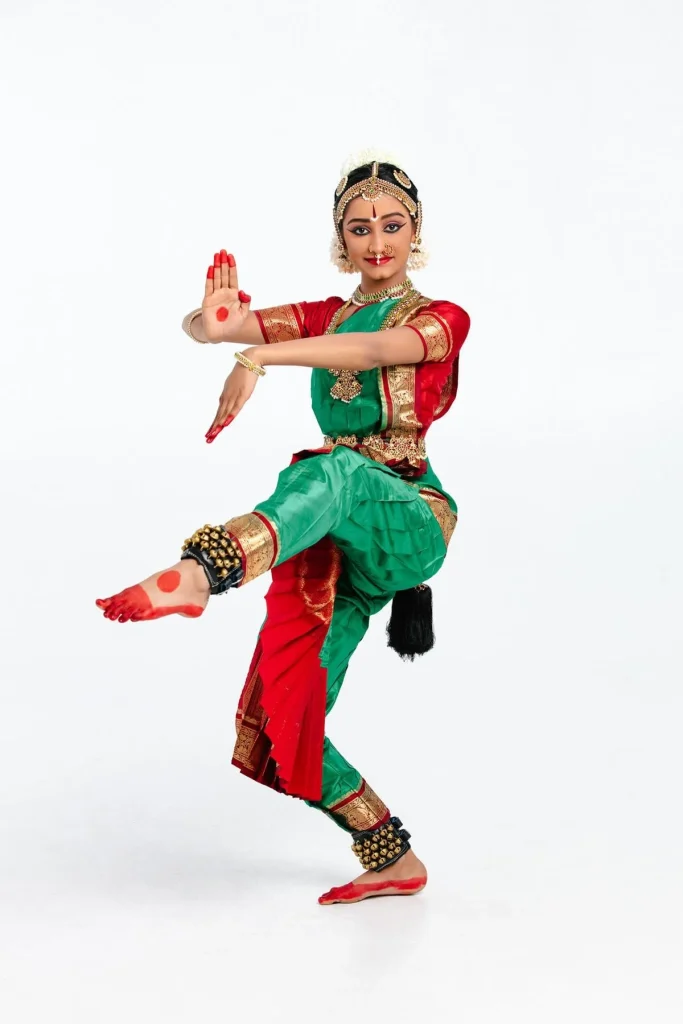
Where & How to get Bharatanatyam Costumes on rent
Look for Reputable Rental Providers
- In most major Indian cities, you can find specialized rental services that provide Bharatanatyam costumes for both men and women in different sizes and with accessories.
- Before you rent a costume, you should examine the following:
- Good quality fabric (silk / art-silk)
- Fine stitching for pleats and fan-pleats that open easily
- Full accessory set (jewellery, ghungroos, waist belt, etc.) — some rental services may include complete temple jewellery while others may only provide the outfit.
- Purity and proper upkeep (costumes should be cleaned between rentals)
Book Early, Especially During Festival or Performance Seasons
- It is the time of festivals, cultural events, and the school dance shows that costume rentals get very busy, and their prices go up. Booking early is the only way to ensure that you will get the right size and style.
- Try Before You Commit — Check Fit and Completeness
- If it is allowed, you can also ask for a fitting or look at the costume in person. Make sure: pleats are done nicely, the waist belt (oddiyanam) fits well, jewellery matches the costume, ghungroos are of the correct size, and the overall look is ready for the stage.
- Be Mindful of Return Conditions & Care
- Most rental agreements involve a security deposit or some form of agreement. Handle the attire gently, refrain from causing stains, and give it back on your due date. As these dresses are frequently passed on from one performer to another, cleanliness and the care of the fabric and jewellery parts become very necessary
Is a Rented Bharatanatyam Costume Good for Photoshoots?
A Bharatanatyam costume on rent is perfect for the following:
- Classical dance portfolios
- Kids’ cultural photoshoots
- Pre-arangetram photos
- Social media dance content
- Theme-based photography
Why buy if you can get a high-quality Bharatanatyam costume on rent without actually purchasing an expensive outfit that you may wear only once? Photographers and dance influencers thus find the option of a Bharatanatyam costume on rent very attractive.
Different Style of Bharatanatyam Costumes to Rent
Depending on your dance theme, you may look at different styles of a Bharatanatyam costume to rent.
- Pyjama Style Costume
This is the mode of a fitted pant, which usually results in strong lines being formed during footwork. A lot of people who get a Bharatanatyam costume on rent in this style for beginners or a young student typically choose this style. - Skirt Style Costume
The main feature of this is the flowing nature, which is very suitable for expressive pieces This style usually has more pleats, which open out very nicely in a Bharatanatyam costume on rent - Stitched Saree Style Costume
This one is closest to the classic nine-yard saree and imitates the look. Mostly, senior dancers are the ones who are professional and popular for choosing this manner of Bharatanatyam costume on rent for stage programs
Ready to perform in style without spending too much?
Start exploring the best Bharatanatyam costumes on rent options near you and step on stage with confidence and grace!